
Zakat is 2.5% of the wealth you have held for a full lunar year, once that wealth is above the nisab. The calculator above uses the two nisab figures that matter in Pakistan right now: the government’s silver nisab of Rs. 503,529, notified on 16 February 2026, and a gold nisab of Rs. 3,242,520 based on the 9 November 2026 gold rate. Add what you own, take away what you owe, and it shows your net zakatable wealth and the Zakat due on it.
Which nisab should you choose?
The silver nisab is 52.5 tola (612.36 grams) of silver, and the gold nisab is 7.5 tola (87.48 grams) of gold. Because silver is so much cheaper, the silver figure is far lower, so more people cross it.
- Silver nisab, Rs. 503,529: the figure most scholars recommend when your wealth is cash, savings or a mix of assets. It is also the figure banks use for the compulsory Zakat deduction.
- Gold nisab, Rs. 3,242,520: used by people whose only zakatable asset is gold. It moves with the gold price, so check the current tola rate before you rely on it.
If you are unsure which applies to you, ask a scholar you trust. The calculator lets you switch between the two and see the difference.
How do I use the Zakat calculator?
1. Pick a nisab and enter your assets and debts. Under Zakatable Assets, enter cash in hand, bank savings, money others owe you, investments and the value of business stock. Under Liabilities, enter money you owe, business liabilities and other payments due now.
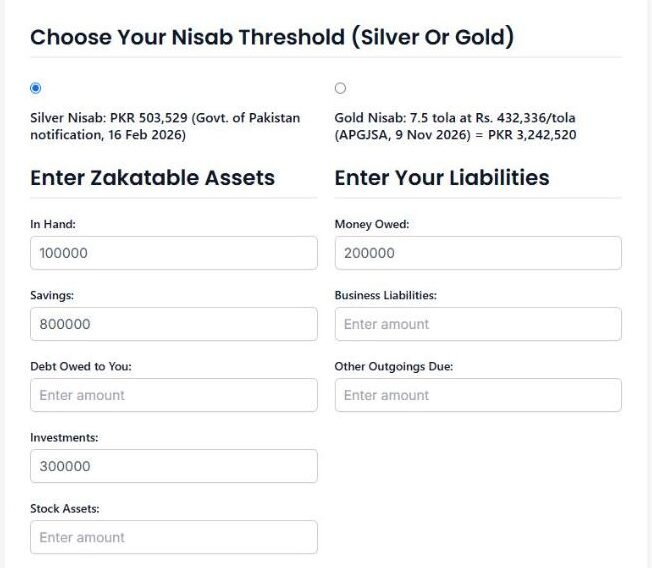
2. Read the result at the bottom. It updates as you type, showing your total net worth and the Zakat payable. There is no button to press.

How is Zakat worked out on Rs. 1,000,000?
In the example above, a person has Rs. 100,000 in cash, Rs. 800,000 in a savings account and Rs. 300,000 in investments, and owes Rs. 200,000.
- Total assets: Rs. 1,200,000.
- Less debts: Rs. 200,000, leaving Rs. 1,000,000.
- Rs. 1,000,000 is above the silver nisab of Rs. 503,529, so Zakat is due.
- 2.5% of Rs. 1,000,000 is Rs. 25,000.
Two quick comparisons show how much the nisab choice matters. Net wealth of Rs. 400,000 is below both nisab figures, so nothing is due. Net wealth of Rs. 2,000,000 owes Rs. 50,000 on the silver nisab but nothing on the gold nisab, because it is still under Rs. 3,242,520.
What counts as zakatable wealth?
- Cash at home and money in bank accounts, including foreign currency.
- Gold and silver you own, at today’s market value. Schools differ on jewellery that is worn regularly, so take advice on that.
- Shares, mutual fund units and other investments, at their current value.
- Stock held for sale in a business, at its sale value.
- Loans you have given that you expect to get back.
Your home, car, household goods and tools you use for work are not zakatable. If you hold shares or fund units, the capital gains tax calculator for shares and the mutual fund redemption tax calculator cover the separate income tax side of selling them.
Will your bank deduct Zakat automatically?
Yes, if you are a Muslim citizen with a savings or term deposit account. Banks deduct 2.5% on the first day of Ramadan from balances above the notified nisab, which is Rs. 503,529 for the 2026 deduction. Current accounts are not touched. If you pay Zakat yourself or follow a fiqh that exempts you, you can stop the bank deduction by submitting a CZ-50 declaration to your bank before Ramadan. The next nisab notification is due early in 2027, before Ramadan.
Does paying Zakat lower your income tax?
It does. Zakat paid under the Zakat and Ushr Ordinance is a deductible allowance under Section 60 of the Income Tax Ordinance, so it reduces your taxable income for the year. Keep the bank’s Zakat deduction certificate and claim it when filing your income tax return online. Salaried people can then rerun their figures on the salary income tax calculator to see the effect. For how Zakat fits alongside the other levies, see this guide to the different types of taxes in Pakistan.
This calculator gives an estimate. Zakat is a religious obligation, and questions about specific assets, debts or your lunar year date are best taken to a scholar you trust.
Want help with Zakat and your tax return?
We can make sure your Zakat deduction is claimed correctly in your return and answer FBR queries about it. Reach our income tax filing team through the Need Help button below, or work out other taxes on the Pakistan income tax calculator.