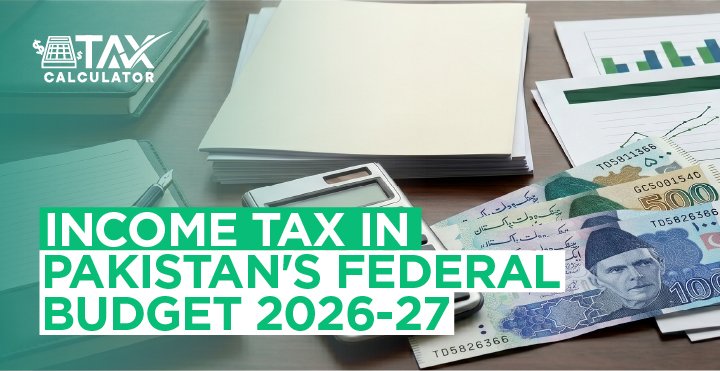
The Benazir Income Support programme (BISP) has been allocated Rs. 838 billion for fiscal year 2026-27, a 17% jump from Rs. 716 billion the year before. Finance Minister Muhammad Aurangzeb announced the figure during his June 12 budget speech in the National Assembly, and it was formally passed on June 23.
But there’s a catch that most coverage glosses over: this figure is Rs. 20.8 billion short of what Pakistan actually promised the IMF. Islamabad committed to funding a quarterly stipend increase to Rs. 18,000 per Kafaalat family starting January 2027, a commitment that, on paper, required a budget of Rs. 858.8 billion, not Rs. 838 billion. That gap is the real story behind this year’s numbers, and it’s worth understanding before you look at where the money is actually going.
Benazir Income Support Budget 2026-27 at a Glance
| FY 2025-26 | FY 2026-27 | |
|---|---|---|
| Total BISP Allocation | Rs. 716 billion | Rs. 838 billion |
| Increase (YoY) | — | Rs. 122 billion |
| Percentage Increase | — | 17% |
| Kafaalat Quarterly Stipend | Rs. 14,500 | Rs. 14,500 (rising to Rs. 18,000 from Jan 2027) |
| Shortfall vs. IMF Commitment | — | Rs. 20.8 billion |
Why You’ll See Two Different Numbers for This Budget
If you’ve come across this topic elsewhere, you may have seen the 2026-27 BISP allocation reported as Rs. 844 billion instead of Rs. 838 billion. Both figures are real; they’re just from different stages of the process. Rs. 844 billion was the proposed figure presented to the First Lady and BISP leadership during a mid-June briefing at Parliament House. Rs. 838 billion is the figure that was actually passed by the National Assembly on June 23 as part of the Finance Bill, 2026, and it’s the number that governs BISP’s actual spending authority for the year. If you need the official, final figure for reporting or reference purposes, Rs. 838 billion is the one to use.
How Will the Government Spend Rs. 838 Billion?
BISP isn’t a single cash handout but an umbrella covering several programs, each aimed at a different kind of vulnerability. Here’s how the allocation breaks down across them.
1. Benazir Kafaalat Program is the unconditional quarterly cash transfer that anchors the entire initiative. Around 12 million households currently receive Rs. 14,500 per quarter, up from Rs. 13,500 in the previous cycle. That stipend is set to rise to Rs. 18,000 starting January 2027, the increase at the center of the IMF shortfall discussed above.
2. Benazir Taleemi Wazaif Program provides Rs. 4,000–Rs. 9,000 to roughly 12.4 million children on the condition that they maintain at least 70% school attendance, tying cash support directly to keeping kids in school.
3. Benazir Hunarmand Program offers free skills training to deserving individuals, with more than 7,000 already enrolled. It’s the government’s attempt to build an exit ramp from dependency rather than sustaining it indefinitely, a small program in absolute numbers, but a meaningful shift in framing.
4. Benazir Nashonuma Program currently supports approximately 2 million pregnant and lactating women and children under two, with an additional 52,000 adolescent girls included under a pilot phase. Zooming out, the program has reached 4.7 million people cumulatively since its 2020 launch. In a fresh development from July 2026, BISP, the World Food Program, UNICEF, and WHO announced a three-year extension of Nashonuma aimed at protecting an additional 3.3 million women and children from malnutrition, bringing its total expected reach to 8 million people. Independent evaluation has found that children enrolled in the program are 22% less likely to be stunted by six months of age.
5. The National Socio-Economic Registry (NSER) holds records on 38.7 million households nationwide, with 23 million of those already updated under the Dynamic Registry system. A recent recertification drive flagged more than 3.5 million additional families as potentially eligible, a sign that the beneficiary pool is still expanding even before next year’s stipend adjustment takes effect.
6. Digital infrastructure is a growing piece of BISP’s spending. Over 10 million beneficiaries are now linked to Digital Social Protection Wallets under the Prime Minister’s Cashless Economy initiative, supported by more than 8.5 million free SIMs distributed specifically to enable this shift. Roughly 410,000 beneficiaries have completed digital and financial literacy training as part of the rollout.
What Role Did the IMF Play in the 2026-27 BISP Budget?
A common misconception is that the IMF finances BISP directly. It doesn’t. The IMF’s involvement is tied to Pakistan’s broader economic reform program, under which Islamabad has committed to protecting low-income households while carrying out subsidy rationalization and revenue reforms elsewhere in the budget.
Within that framework, the IMF has consistently pushed for adequately funded, better-targeted, and more transparent social protection spending, including regular stipend adjustments to keep pace with inflation. Pakistan’s own commitment to the Fund was specific: raise the Kafaalat quarterly stipend to Rs. 18,000 for roughly 10.2 million beneficiaries starting January 2027. Meeting that commitment in full would have required a budget of Rs. 858.8 billion. The approved Rs. 838 billion allocation leaves a Rs. 20.8 billion gap against that target.
That doesn’t necessarily mean the January 2027 stipend increase won’t happen. Supplementary budget allocations are common in Pakistan’s fiscal cycle, and the government has signaled it intends to phase the increase in regardless. But it does mean the current year’s budget, as passed, doesn’t yet fully fund the commitment on paper.
Where the Government Wants BISP to Go Next
The official framing around BISP has shifted noticeably over the past two budget cycles, and that shift signals where future allocations are likely headed. BISP Chairperson Senator Rubina Khalid has described the program as moving beyond cash assistance towards an integrated, digital and empowering social protection system, a phrase that shows up consistently across recent government briefings.
Three priorities stand out:
- Deeper digital integration means expanding the wallet and SIM-linked financial inclusion model, so beneficiaries interact with formal banking rather than relying solely on cash pickups.
- A heavier emphasis on skills training and graduation pathways through Hunarmand: an implicit acknowledgment that an ever-expanding cash transfer bill isn’t fiscally sustainable indefinitely.
- Sharper targeting through the Dynamic Registry, since a program this size only works if the data identifying who qualifies keeps pace with who actually needs support.
There’s also an economic argument that the government leans on whenever BISP’s cost draws criticism. A World Bank study found that every rupee disbursed through BISP generates Rs. 2.34 in real income through local economic multiplier effects, with 68% of those gains going to the poorest 40% of households. The same research found the program supports 1.66 million full-time equivalent jobs and returns an estimated Rs. 174 billion in economic activity to the national exchequer annually, figures the government cites to argue BISP pays for itself many times over in downstream economic activity.
How can I check my BISP payment or eligibility status? Eligibility and payment status can be checked by sending your CNIC via SMS to 8171, or through the 8171 web portal. BISP does not charge any fee for registration, status checks, or payments and treat requests for payment as a scam.
Why BISP Remains Central to Pakistan’s Social Protection Strategy
Since its 2008 launch, BISP has evolved from a single cash-assistance scheme into one of Pakistan’s most extensive social protection systems, now reaching over 10.3 million families, close to a quarter of all households in the country, according to World Bank estimates.
Today it serves several overlapping policy goals at once: easing the immediate financial burden on vulnerable households, supporting women through direct financial inclusion (payments are registered to female heads of household), and cushioning the impact of inflation during periods of economic adjustment. The government’s continued increase in BISP funding reflects a broader shift toward targeted welfare spending, using data to direct public resources to the households that need them most, rather than spreading subsidies across the entire population regardless of income.
This approach is expected to remain central to Pakistan’s fiscal strategy going forward, as the government continues to balance IMF-driven fiscal discipline with its social welfare commitments. If you’re tracking how this year’s federal budget affects take-home pay alongside programs like BISP, our breakdown of the new income tax slabs covers the other side of that balance.